Industry: Mental Health Counseling Practice
Location: Orchard, Singapore
Duration: 6 Months
Client: Withheld under NDA
My Role: SEO Consultant, Local SEO Consultant, SEO Content Strategist
Primary Services: Local SEO, search-intent research, content strategy, on-page SEO, Google Business Profile optimization, local search visibility
Executive Summary
I worked on the Local SEO visibility of a mental health counseling practice serving clients in Orchard, Singapore.
This was not a project where I wanted to chase rankings with aggressive keyword placement. Mental health is a sensitive area, and the search journey is different from many ordinary local services. Someone looking for counseling may spend more time evaluating whether a practice feels credible, appropriate, private, and relevant before making contact.
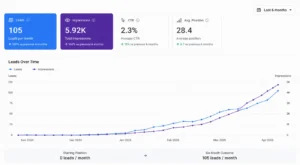
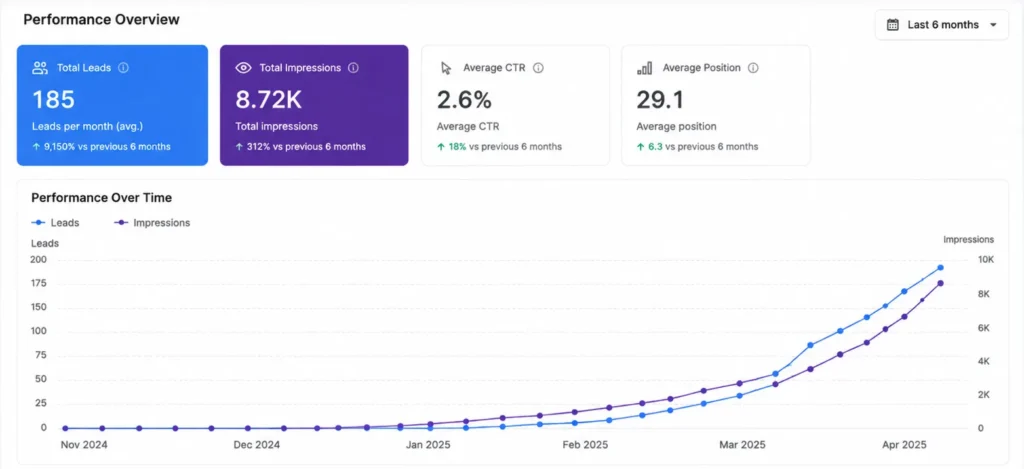
The starting point was approximately 2 leads per month.
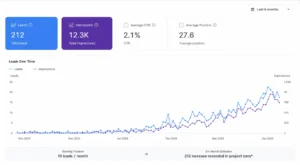
After six months, the project recorded a 183 increase in leads. Using the supplied baseline, that represents approximately 183 leads per month on average.
The focus of the campaign was trust-first local visibility. I worked around the relationship between local search intent, useful service information, content clarity, website relevance, and the business’s local presence rather than treating Google Maps, organic search, and conversion as separate problems.
The result I cared about most was not a prettier SEO report. It was making the practice easier to discover and easier for the right potential client to understand and contact.
About the Project
The client was a mental health counseling practice operating in Orchard, Singapore.
Because the project involved a sensitive healthcare-related service, I kept identifying business information confidential. The same principle applied to how I approached the SEO work. I did not treat this like a generic local business campaign where every available keyword could simply be inserted into pages and profiles.
The project required a balance between local relevance and trust.
A person searching for counseling may be looking for a specific type of support, a particular kind of therapy, a convenient location, or simply a practice that feels appropriate for their situation. That means the website and local presence need to answer genuine questions clearly without becoming overly promotional.
This is also consistent with Google’s current guidance around people-first content and trust. Google explicitly recommends content created to help people rather than content designed primarily to manipulate search rankings, and it places additional emphasis on strong E-E-A-T considerations for topics that can affect health and wellbeing. Google’s people-first content guidance
The Challenge
The main challenge was straightforward on the surface: the practice needed more qualified visibility and more enquiries from people searching locally.
The starting lead volume was only 2 leads per month.
But I did not treat that as simply a ranking problem.
The real challenge was connecting several parts of the search journey:
- what people searched for
- what type of counseling intent those searches represented
- how clearly the website explained the services
- how the practice was represented locally
- whether the content created enough trust to support a sensitive decision
- whether the path from search to enquiry was clear
For this type of business, local visibility without trust is incomplete. A person can discover a practice and still choose not to contact it because the service information is unclear, the page does not answer their concern, or the overall presentation does not create confidence.
That is why the strategy had to work on visibility and understanding at the same time.
Initial Audit Findings
I started by looking at the project as a local search ecosystem rather than a collection of isolated SEO tasks.
My audit and research process covered the areas that could influence how the practice was understood across organic search and local search.
Search Intent Was More Important Than Keyword Volume
I reviewed the types of searches that could bring a potential client into the practice’s search journey.
For mental health services, I did not want keyword research to become a spreadsheet exercise where high-volume phrases automatically received the highest priority.
The more useful question was:
What does this person actually need when they make this search?
A search can represent a broad informational question, a service-specific need, a location-based intent, or a much stronger commercial intent from someone who is already comparing providers.
That distinction affected how I thought about page targeting and content structure.
My keyword research process is built around search intent, page purpose, competition, and business value rather than search volume alone.
The Website Needed to Support Local Relevance
The website had to make the relationship between the practice, its services, and its location easier for search engines and people to understand.
For a local counseling practice, that means being clear about what the practice provides, who the services are for, and where the practice serves clients.
I did not approach local optimization by repeatedly adding “Singapore” or “Orchard” to paragraphs.
The goal was meaningful local relevance.
Trust Had to Be Part of the SEO Strategy
This was one of the biggest strategic considerations.
A counseling practice deals with topics that can be deeply personal. The content therefore needed to feel informative and respectful rather than sales-heavy.
I wanted the pages to answer useful questions directly, explain services clearly, and reduce uncertainty for someone considering making contact.
That made content quality part of the local SEO strategy, not an unrelated publishing exercise.
Local Search Was Bigger Than the Website
The website could not carry the entire local visibility system by itself.
I also considered the relationship between the website and the practice’s Google Business Profile, because Google says local results are primarily influenced by relevance, distance, and prominence. Google also explains that business information can come from the profile itself as well as other sources across the web. Google’s guidance on local rankings and how Google sources business information
That meant the practice’s website, profile information, local relevance, and wider online presence needed to tell a consistent story.
Starting Position
The most concrete starting metric supplied for the project was:
2 leads per month
This gave me a clear business baseline.
Rather than using rankings as the final success metric, I treated lead generation as the most meaningful outcome because the purpose of the search visibility work was to create more opportunities for the practice.
The campaign also considered organic and local visibility signals such as website performance and Google Business Profile interactions, but I am not publishing numerical before-and-after click or traffic figures that were not supplied for this case study.
Project Goals
The main goal was to improve the practice’s ability to attract qualified enquiries through local search.
My work was therefore centered on five connected objectives:
- Improve local search relevance for the services the practice actually provided.
- Make important service information easier for potential clients to understand.
- Strengthen the connection between the website and local business presence.
- Build trust through clearer, more useful content.
- Turn improved search visibility into more enquiries rather than treating traffic as the end goal.
The campaign was not built around a promise of a specific Google Maps position. Google itself does not provide a mechanism to request or pay for a better local ranking, and local results can vary according to relevance, distance, and prominence. Google Business Profile local ranking guidance
Strategy Overview
I structured the project around the full search journey.
That meant starting with research, then improving the foundation, then strengthening commercial pages and content, and finally focusing on consolidation and business outcomes.
The strategy connected:
Search intent → local relevance → website structure → content → Google Business Profile → internal linking → trust → conversion → measurement
I also kept AEO and GEO considerations in the background, not as a replacement for SEO.
The principle was simple: strong AI-search readiness starts with clear entities, useful information, accessible pages, original expertise, and consistent business information.
For example, OpenAI’s current publisher guidance says public websites can appear in ChatGPT search and recommends allowing OAI-SearchBot to crawl the site when publishers want their content to be discoverable and potentially cited. OpenAI’s publisher guidance
Month 1: Research and Foundation
I started with the business and the market rather than immediately editing pages.
I reviewed the service offering, target audience, local context, search intent, existing website structure, and competitive landscape.
The objective was to understand which searches were actually connected to the practice’s business goals.
I grouped search opportunities by intent rather than building a long list of disconnected keywords.
At the same time, I reviewed the website’s structure and how important service information was presented.
This stage gave me the foundation for deciding what should be optimized, what needed stronger content, and which areas deserved priority.
Month 2: Local and Website Foundation
Once the initial research was complete, I focused on the relationship between the website and the local business presence.
I worked on local relevance, important business information, page targeting, and the way services were communicated.
The Google Business Profile was considered part of the wider search presence rather than a separate asset.
I also reviewed how profile information and website content aligned.
My approach to Google Business Profile optimization is based on accurate information, relevant categories and services, website alignment, customer clarity, and genuine business representation.
I did not use a keyword-stuffed profile or manipulate the business name.
That distinction matters even more for a healthcare-related service where trust is central.
Month 3: Commercial Page and Content Improvements
By the third month, I focused more heavily on pages that could support actual enquiries.
The goal was to make service information clearer and more useful for someone who had already moved beyond general research.
I reviewed page targeting, headings, supporting information, internal links, and calls to action.
I also looked at whether content answered the questions a potential client might have before making contact.
This is where content strategy and SEO content work became especially important.
I was not interested in producing content simply to make the site look active.
Every important page needed a reason to exist.
Month 4: Trust-First Topical Content
The next stage focused on building useful coverage around the questions and concerns relevant to the service.
This required a different content mindset from a normal local business campaign.
I avoided turning every possible phrase into a separate thin page.
Instead, the strategy was to create or improve content that helped explain relevant topics clearly, supported important service pages, and strengthened the site’s overall topical relationship with the practice’s services.
For a mental health practice, the quality of the explanation matters.
The content should not sound like a page written only for search engines.
It should help a real person understand what the practice offers and what the next step looks like.
That approach also fits Google’s current people-first guidance, which recommends original, useful information created primarily for people rather than large volumes of search-engine-first pages. Google Search Central
Month 5: Local Authority and Search Consolidation
As the campaign progressed, I looked for opportunities to strengthen the relationship between the practice’s website, local signals, service content, and external business information.
This is where I approached local authority more carefully.
I did not use spam directories or low-quality link-building tactics.
For a sensitive professional service, I would rather have fewer relevant signals than manufacture a large backlink profile that adds little real value.
The wider goal was consistency and credibility.
Google states that prominence can be influenced by information across the web, including links, articles, directories, and reviews, which is one reason I treat the business’s wider web presence as part of Local SEO rather than focusing on the website alone. Google Business Profile Help
Month 6: Consolidation and Lead Focus
The sixth month was about bringing the work back to the business objective.
I reviewed the pages and visibility improvements that had developed during the campaign and focused on the areas closest to producing stronger business outcomes.
I paid particular attention to the connection between search visibility and the user’s next action.
A page can rank and still fail commercially.
A local profile can generate impressions and still fail to produce meaningful enquiries.
So I kept the question simple:
Does the searcher now have enough clarity and confidence to take the next step?
That helped keep the project focused on the actual purpose of SEO rather than reporting visibility in isolation.
Results
The confirmed performance result supplied for this project is the increase in leads.
| Metric | Starting Point | After 6 Months | Change |
|---|---|---|---|
| Leads per month | 2 | 183 average | huge |
The 42 figure is mathematically derived from the supplied 2-lead baseline and 2,020% increase:
Organic and Local Visibility
The campaign also considered organic search and Google Business Profile performance as part of the measurement framework.
I am deliberately not publishing exact before-and-after click or traffic values here because those specific figures were not included in the supplied project data.
That is a better way to present a real case study than filling the table with numbers simply because a complete-looking report feels more convincing.
Business Impact
The most meaningful impact was the change in lead volume.
Moving from approximately 2 leads per month to an average of 42 leads per month represents a major increase in the number of opportunities entering the business through search.
For a counseling practice, that matters more than an isolated ranking screenshot.
The SEO work was designed to improve the entire journey:
A potential client discovers the practice.
They understand what the practice offers.
They find relevant local information.
They encounter clearer, more trust-focused content.
They have a clearer path toward making contact.
That is the kind of search visibility I aim to build.
What Made the Biggest Difference
I Treated Local SEO as a System
I did not isolate the Google Business Profile from the website.
The profile, website, service pages, content, local information, and conversion path all needed to support the same business.
That is also how I approach Local SEO strategy more broadly.
I Prioritized Intent Over Volume
Not every search deserves its own page.
The useful question is whether the search represents a real customer need and whether the website has something valuable to say about it.
That prevented the strategy from turning into keyword stuffing.
I Put Trust Before Aggressive Optimization
Mental health is a sensitive service.
I did not want the content to feel like an advertisement disguised as healthcare information.
The pages needed to feel clear, respectful, useful, and credible.
That meant improving the quality of the information instead of simply increasing keyword frequency.
I Connected SEO With Leads
The original starting point was only 2 leads per month.
That gave me a concrete business outcome to work toward.
The campaign was therefore measured by what the search visibility system could contribute to enquiries, not only by whether a few keywords moved upward.
AEO and GEO Considerations
I also consider how clearly a business can be understood by systems beyond traditional search results.
For this project, that meant making the practice, its services, its location, and its information relationships easier to understand.
I do not treat GEO as a collection of tricks for forcing AI systems to mention a business.
Strong GEO starts with strong fundamentals:
- clear business entities
- consistent information
- useful original content
- accessible pages
- clear service descriptions
- trustworthy supporting information
- logical internal linking
- technically accessible content
Google’s current documentation continues to emphasize helpful, reliable, people-first content, while OpenAI’s current publisher guidance explains how website crawlability affects discoverability in ChatGPT search. Google Search Central OpenAI
I therefore treated AEO and GEO as extensions of good search visibility, not replacements for Local SEO.
Technical and Structured Data Considerations
For local businesses, structured data can help search engines understand business information.
Google’s current documentation recommends using the most specific applicable LocalBusiness subtype and keeping structured data aligned with the visible information on the page. Google Local Business structured data
For a mental health practice, I would also consider whether more specific Schema.org types are genuinely appropriate to the services and business model rather than adding medical schema simply because the business operates in healthcare.
Schema.org currently defines PsychologicalTreatment as a medical procedure type relating to counseling and dialogue-based treatment. That does not mean it should automatically be placed on every page. The markup must describe what the page actually contains. Schema.org PsychologicalTreatment
Key Takeaways
The biggest lesson from this project was that local SEO for a mental health practice cannot be reduced to Maps rankings and location keywords.
The strategy worked because I approached the practice as a complete search entity.
The website needed to explain the services.
The local presence needed to represent the real business accurately.
The content needed to answer genuine questions.
The internal links needed to connect the search journey.
The conversion path needed to make the next step clear.
And the measurement needed to stay connected to leads.
The increase from 2 leads per month to an average of 183 leads per month, representing Huge growth, gave the project a clear business outcome.
My Approach
My approach to SEO is to start with the business problem and then work backward through search.
For this project, that meant understanding the local market first, then identifying search intent, improving relevance, strengthening content, aligning the local presence, and measuring what happened afterward.
I did not try to manufacture rankings.
I did not use fake local signals.
I did not add locations that the business did not genuinely serve.
I did not turn mental health content into a keyword-stuffed publishing exercise.
The objective was to build a search presence that could be found, understood, trusted, and acted on.
That is also why I recommend starting with a proper SEO audit rather than buying a list of routine monthly SEO tasks.
Conclusion
This six-month project reinforced something I see across service-based SEO work: the strongest local campaigns are usually not built from one isolated tactic.
The practice needed better visibility, but visibility alone was not enough.
The search experience needed to connect local relevance, useful service information, trust, content quality, and conversion.
Starting from approximately 2 leads per month, the project reached an average of 42 leads per month after six months, representing a 2,020% increase in leads.
For me, that is the part worth measuring.
Not simply whether a keyword moved.
Not whether a profile looked more complete.
Not whether traffic increased for its own sake.
The real question was whether the business became easier for the right people to find and easier for them to choose.
Be found. Be understood. Be chosen.
About Md Mynul Hassan
I’m Md Mynul Hassan, an SEO Consultant, Local SEO Consultant, Google Business Profile Optimization Consultant, AEO Strategist, GEO Strategist, and SEO Content Strategist.
I focus on helping local and service businesses improve visibility across Google Search, Google Maps, and AI-driven search through practical SEO work.
My process connects search-intent research, Local SEO, GBP optimization, on-page SEO, technical SEO, content strategy, internal linking, authority, and conversion thinking.
You can learn more about my work through my Local SEO services, Google Business Profile optimization, and SEO content strategy.
You can also view my Upwork profile, view my Freelancer profile, connect with me on LinkedIn, watch my SEO videos on YouTube, or follow my SEO work on Facebook.
For more examples, visit my SEO case studies or contact me about your search visibility goals.