Industry: Legal & Professional Services
Business Type: Immigration Law Firm
Location: Leicester, UK
Project Duration: 6 Months
Client: Withheld under NDA
My Role: SEO Consultant, Local SEO Consultant, Google Business Profile Optimization Consultant, SEO Content Strategist
Primary Services: Local SEO, Google Business Profile Optimization, Keyword Research, Search Intent Analysis, On-Page SEO, Technical SEO, Content Strategy, Internal Linking, Local Content, EEAT, AEO/GEO, Conversion-Focused SEO
Executive Summary
I worked on a six-month SEO project for an immigration law firm serving clients in Leicester and its surrounding market.
The business already had a website and Google Business Profile, but the search presence was not translating into enough qualified enquiries. At the beginning of the project, the business was generating around 10 leads per month.
I did not treat this as only a rankings problem.
Immigration is a trust-sensitive service. Someone searching for help with a spouse visa, settlement, citizenship, asylum, sponsor licence, or another immigration matter is not simply looking for a webpage. They are trying to find a professional they can trust with a high-stakes decision.
That changed how I approached the SEO work.
I focused on making the firm’s website, Google Business Profile, local signals, service content, trust information, internal links, and conversion paths communicate the same thing clearly:
What the firm does, who it helps, where it operates, and why a prospective client should consider contacting it.
The project ran for six months, beginning with research and auditing before moving into local optimization, commercial page improvements, content development, internal linking, trust-focused optimization, and conversion refinement.
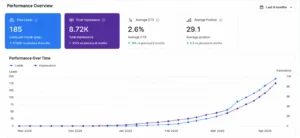
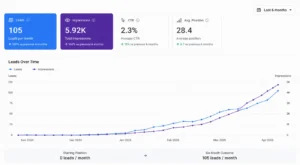
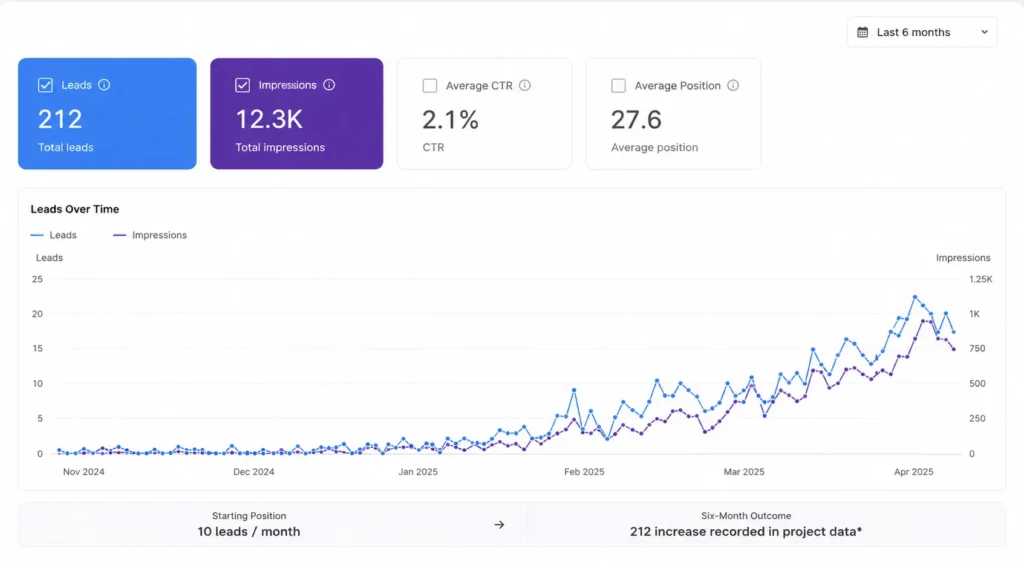
The project data supplied for this case study records a 212 increase after six months, alongside the starting level of approximately 10 leads per month. Because the supplied project note does not define the unit behind “212,” I have kept that figure exactly as recorded rather than presenting it as a percentage, final lead count, or click total.
About the Project
Leicester is a competitive local market for immigration legal services.
Current search results show established firms competing around terms such as immigration lawyer Leicester and immigration solicitors Leicester, while competitors also create service-specific and community-oriented content around spouse visas, work visas, settlement, asylum, appeals, and related immigration matters.
That meant the project could not rely on simply adding “Leicester” to existing pages.
I needed to understand how people search for immigration assistance and how the firm’s existing website and local presence compared with the businesses already attracting that demand.
From a Local SEO perspective, Google confirms that local results are primarily influenced by relevance, distance, and prominence. Google also explains that information used in local search can come from a business’s own website as well as other public sources.
That gave me a useful foundation for the project.
My job was not to manipulate those signals. It was to make the business information more complete, relevant, consistent, useful, and trustworthy.
The Challenge
The main problem was a mismatch between the quality of the firm’s actual service offering and the way that offering was represented in search.
The firm could help people with specific immigration needs, but the website did not initially give every important service a clear search-focused journey.
I identified several areas that needed attention.
One Website Was Trying to Answer Too Many Different Searches
Immigration law contains many distinct customer intents.
Someone searching for an immigration lawyer Leicester is at a different stage from someone searching for a spouse visa solicitor, ILR solicitor, asylum solicitor, sponsor licence advice, or help following a visa refusal.
Those searches may all belong to the same law firm, but they should not automatically lead to the same generic page.
I therefore mapped the search demand against services and user intent instead of treating immigration-related keywords as one large group.
Trust Was as Important as Visibility
A legal website cannot rely on SEO language alone.
Potential clients want to understand who is providing the service, what type of cases the firm handles, how the process works, whether consultations are available, what happens next, and whether the firm appears credible.
That made trust-focused content a major part of the project.
I looked for opportunities to make expertise and process clearer rather than filling pages with generic claims.
Local Relevance Needed to Be Clear
The project was Leicester-focused, so I reviewed how clearly the firm connected its services with Leicester and the surrounding customer context.
I also assessed the relationship between:
- the website
- Google Business Profile
- business information
- service pages
- local references
- citations
- reviews
- internal links
- external authority signals
Google’s own guidance states that complete and accurate Business Profile information helps Google understand whether a business is relevant to a local search.
The Conversion Path Needed Attention
Getting someone to the website was only part of the objective.
The more useful question was:
What happens after the searcher arrives?
I therefore reviewed contact visibility, calls to action, service-page clarity, enquiry paths, and the amount of friction between finding the firm and taking the next step.
Initial Audit Findings
I started with a combined SEO and Local SEO audit.
I did not run a tool, collect hundreds of warnings, and treat every warning as equally important. I separated findings by their potential effect on search visibility, relevance, trust, and enquiries.
My audit covered technical SEO, keyword targeting, search intent, website structure, commercial pages, content, internal links, local signals, GBP, competitors, and conversion paths.
Technical Foundation
I reviewed the technical structure of the site for issues involving:
- crawling and indexing
- URLs and canonicalization
- redirects
- robots.txt
- XML sitemap accessibility
- internal links
- page structure
- mobile usability
- structured data
- page performance
- Search Console issues
Google’s current Search Essentials still put technical eligibility, helpful content, crawlable links, and clear site structures among the fundamental requirements and best practices for search visibility.
Keyword and Search-Intent Research
I did not select keywords based on volume alone.
I grouped searches by the problem the potential client was trying to solve.
For example, I separated:
Core local commercial intent
- immigration lawyer Leicester
- immigration solicitor Leicester
- immigration law firm Leicester
- immigration lawyers near me
Service-specific intent
- spouse visa solicitor Leicester
- partner visa solicitor Leicester
- UK work visa solicitor Leicester
- sponsor licence solicitor Leicester
- ILR solicitor Leicester
- citizenship solicitor Leicester
- asylum solicitor Leicester
- visa appeal solicitor Leicester
Informational and decision-support intent
- how does a spouse visa work
- how to apply for ILR
- what happens after a visa refusal
- what documents are needed for a UK visa
- when should I speak to an immigration solicitor
I then mapped these searches against pages rather than attempting to force every phrase onto the homepage.
My keyword research service follows the same principle: keyword selection should be connected to business value, intent, page purpose, and the customer journey rather than search volume alone.
Competitor Research
I reviewed the firms appearing in Leicester-related immigration search results and looked at what they were doing well.
Some competitors had strong dedicated service pages.
Others emphasized local identity, reviews, multilingual service, consultation options, specialist experience, or community familiarity. Current Leicester competitors also demonstrate how much of the market messaging is built around specific services rather than only generic “immigration lawyer” positioning.
I used those observations to identify content and positioning gaps.
I did not copy competitor wording or build pages simply because another firm had one.
Google Business Profile Review
I reviewed the Business Profile as part of the wider local search system.
My focus included:
- business information accuracy
- category relevance
- services
- description and business context
- website landing-page relevance
- local consistency
- review handling
- photos and supporting profile information
- relationship between GBP and the website
Google states that local ranking is mainly based on relevance, distance, and prominence, and notes that reviews and information from across the web can contribute to prominence.
That is why I treated GBP optimization as more than filling in fields.
Starting Position
At the start of the engagement, the business was generating approximately:
10 leads per month
The wider visibility situation showed room for improvement across both organic search and local search.
The website needed stronger alignment between service intent and page structure.
The local presence needed stronger alignment between the Business Profile, website, business information, and service relevance.
The content needed to answer real questions potential immigration clients were asking before they were ready to make contact.
The conversion journey also needed to make the next step more obvious.
Project Goals
I established several connected goals.
The first was to improve visibility for relevant Leicester immigration searches.
The second was to make important immigration services easier for search engines and potential clients to understand.
The third was to strengthen the firm’s local search presence without using manipulative local SEO tactics.
The fourth was to build useful trust-focused content around the questions clients ask before contacting a lawyer.
The fifth was to improve the path from search visibility to enquiry.
The objective was therefore not simply more traffic.
It was more relevant visibility that could create more qualified opportunities for the business.
Strategy Overview
I structured the project around this sequence:
Research → Audit → Search Intent → Technical Foundation → Local Relevance → Commercial Pages → Content → Internal Linking → Trust → Authority → AEO/GEO → Conversion → Measurement
One of the biggest principles behind the project was consistency.
The website could not say one thing while the GBP communicated something else.
A service page could not target a search without clearly explaining the service.
A blog article could not exist as an isolated traffic page without contributing to the wider topic structure.
And a visitor should not have to work hard to figure out how to contact the firm.
Month 1: Research, Audit and Foundation
The first month was about understanding the existing situation before making large changes.
I completed the initial SEO and Local SEO audit, reviewed competing firms, studied search intent, and organized the keyword landscape around business services.
I also reviewed the existing website structure.
One thing I noticed was that some commercial opportunities were being treated too generally. Rather than forcing every immigration-related search onto one page, I identified where separate pages or stronger page sections would better match user intent.
I also reviewed internal linking.
I wanted important commercial pages to receive contextual links from supporting content rather than leaving them isolated.
My SEO Audit Service is built around this kind of prioritization. I look at technical issues, content, search intent, site architecture, internal linking, competitors, authority, and conversion opportunities together rather than forwarding an automated audit report.
Month 2: Local SEO and Google Business Profile
The second month focused more heavily on local visibility.
I worked through the Business Profile information and aligned it more closely with the actual services offered.
I reviewed local business information, categories, service descriptions, and the relationship between the GBP and the relevant website pages.
I also reviewed citation consistency and local references.
I deliberately avoided low-quality citation volume.
There was no reason to create hundreds of directory entries that added little value.
The goal was accurate business information on legitimate and relevant platforms.
I also considered how reviews were being handled.
I did not recommend manufactured reviews or artificial review campaigns. In legal services, that would be especially damaging to trust.
The aim was to make the real customer experience easier to understand and to encourage a genuine review process.
My Google Business Profile Optimization service follows the same principle of improving the profile as part of the wider local search system rather than treating GBP as an isolated task.
Month 3: Commercial Service Pages
Month three moved deeper into service-page optimization.
I focused on the pages closest to the firm’s commercial goals.
Each important service needed to answer several questions quickly:
What service is this?
Who is it for?
What situation does it address?
What does the process involve?
Why should someone consider speaking to this firm?
What should the visitor do next?
I refined titles, headings, page introductions, supporting sections, internal links, calls to action, and trust elements where appropriate.
I also looked at whether the content was answering the searcher’s actual intent instead of merely repeating a keyword.
For a sensitive legal service, that distinction matters.
Someone searching for a spouse visa solicitor is not looking for a page that says “spouse visa solicitor” thirty times.
They want useful information that helps them decide whether the firm is appropriate for their situation.
Month 4: Content and Topical Authority
Once the commercial pages were in better shape, I developed supporting content around the questions prospective clients were likely to ask.
I used a hub-and-spoke model.
The main immigration service pages acted as commercial hubs.
Supporting content covered relevant questions, process explanations, service differences, document considerations, and common client concerns.
This had two purposes.
First, it created useful resources for potential clients earlier in their decision process.
Second, it gave me natural contextual opportunities to link back to the commercial pages.
I did not publish articles just to increase the number of pages on the website.
Every topic needed a reason to exist.
That principle also supports AEO and GEO work.
Google’s current documentation says the same foundational SEO practices remain relevant for AI features such as AI Overviews and AI Mode. Google specifically highlights helpful people-first content, crawlability, internal links, accessible textual information, structured data consistency, and up-to-date Business Profile information.
So I did not create a separate “AI content” layer.
I strengthened the underlying information system.
Month 5: Trust, Authority and Local Relevance
Month five focused on strengthening the signals around the firm.
I revisited the relationship between website content, local references, citations, reviews, and external authority.
I looked for opportunities for relevant local or industry mentions rather than chasing backlink volume.
The same principle applied to content.
A legal firm needs evidence of expertise and useful information more than generic promotional wording.
I therefore emphasized:
- clear service explanations
- process information
- useful FAQs
- practitioner or firm credibility
- transparent contact information
- relevant local context
- consistent business information
- meaningful internal links
- appropriate external references
I also checked whether important pages were receiving enough contextual support from the rest of the site.
Month 6: Consolidation and Conversion
The final month focused on consolidation.
I reviewed pages that were already showing signs of search visibility and looked for opportunities to improve relevance, titles, content depth, internal links, and click-through potential.
I also reviewed the conversion path.
A visitor coming from Google should not need to search the website to find out how to make an enquiry.
I looked at:
- calls to action
- contact visibility
- enquiry pathways
- service-page clarity
- mobile usability
- trust information
- friction between landing and enquiry
This was where the SEO work connected most directly with the business objective.
The aim was not traffic for its own sake.
The aim was to increase the number of relevant people who could discover the firm and then take a meaningful next step.
Results
Lead Generation
The supplied project data records the following starting point and six-month outcome:
| Metric | Starting Position | Six-Month Outcome |
|---|---|---|
| Leads | 10 per month | 212 increase recorded in project data* |
*The supplied project note describes the outcome as “212 increase” but does not specify whether 212 represents a final lead count, percentage increase, clicks, or another measurement unit. I have intentionally not converted or reinterpreted the figure.
This distinction matters to me.
A case study should be persuasive because the work is explainable and the evidence is traceable, not because the numbers are made to sound larger.
Organic Search Impact
The project also focused on improving organic visibility for commercially relevant searches, especially searches connected with immigration services and Leicester.
I measured progress through the available search-performance data rather than relying only on isolated ranking screenshots.
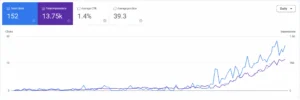
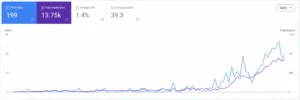
The areas I paid attention to included:
- impressions
- clicks
- CTR
- average position
- visibility of priority service pages
- visibility of supporting informational content
- enquiries generated through organic traffic
Google recommends using Search Console to understand search performance and diagnose potential search visibility issues.
Maps and GBP Impact
The local side of the project centered on improving the alignment between:
Business Profile → Website → Services → Location → Trust → Customer Action
I did not promise a city-wide position in Google Maps.
That would not be responsible.
Google explains that local results depend primarily on relevance, distance, and prominence, meaning rankings can vary based on the searcher’s location and the competitive environment.
My objective was to improve the quality and consistency of the local presence so that the firm had stronger foundations for relevant searches.
What Made the Biggest Difference
The biggest improvement did not come from one isolated SEO task.
It came from connecting several pieces that had previously been treated separately.
Search Intent Before Content
I started with what people were actually trying to accomplish.
That prevented the website from becoming a collection of pages targeting similar-looking keywords without a clear purpose.
Service-Level Optimization
I gave important immigration services clearer commercial destinations instead of depending too heavily on broad pages.
That helped the website communicate the firm’s actual offer more precisely.
Local SEO as a System
I did not treat Google Business Profile optimization, citations, local content, and website optimization as unrelated tasks.
They were different parts of the same local search system.
Trust-Focused Content
For immigration law, content has to reduce uncertainty.
Process explanations, useful questions and answers, transparent service information, and clear next steps can be more valuable than adding another generic article.
Internal Linking
I used internal links to connect supporting informational content with the commercial pages it supported.
This helped users move from learning about an immigration issue to understanding the firm’s relevant service.
It also created a clearer site structure.
Conversion Thinking
The project was measured against a business outcome.
I kept asking:
Does this make it easier for the right person to contact the firm?
That question influenced both SEO and page-level decisions.
AEO and GEO Considerations
I also considered how the site’s information could support answer-oriented and AI-assisted search experiences.
I did not create pages around artificial “AI SEO” tricks.
I focused on the fundamentals:
- clear entity information
- direct answers
- useful question-based sections
- strong service definitions
- consistent business information
- accessible text
- contextual internal links
- original useful information
- credible supporting sources
Google’s current guidance explicitly says there are no special technical requirements or special schema needed solely to appear in AI Overviews or AI Mode. The underlying SEO fundamentals remain important.
That supports the way I approached AEO and GEO in this project.
Strong GEO starts with strong SEO.
Key Takeaways
One of my biggest lessons from this project was that local visibility for a legal business is closely tied to clarity and trust.
The firm did not need a website filled with immigration keywords.
It needed a website that made the firm’s expertise, services, location, and customer journey easier to understand.
I also found that content worked better when it was connected to commercial intent.
A useful article should have a logical relationship with a service page.
A service page should answer the actual needs behind the search.
The GBP should represent the same business accurately.
The contact journey should then make the next step clear.
That is the system I was trying to build.
My Approach
I approach SEO as a search-visibility system rather than a checklist of isolated tasks.
For this project, the process looked like:
Business Goals → Research → Search Demand → Search Intent → Technical Foundation → Local Relevance → Commercial Pages → Content → Internal Linking → Trust → Authority → AEO/GEO → Conversion → Measurement
I did not promise a #1 ranking.
I did not manipulate the business name.
I did not use keyword stuffing.
I did not build spam backlinks.
I did not manufacture reviews.
And I did not turn an unclear metric into a more impressive-looking result.
The value of the project came from identifying what was actually limiting visibility, fixing the highest-priority issues, and connecting organic search with the business’s need for qualified enquiries.
Internal Resources
Readers who want to understand the type of work behind this project can explore my Local SEO Service, Technical SEO Service, SEO Audit Service, SEO Content Writing and Content Strategy Service, AEO & GEO Consulting, and contact page.
About Md Mynul Hassan
I’m Md Mynul Hassan, an SEO Consultant and Local SEO Consultant specializing in Local SEO, Google Business Profile optimization, Google Maps visibility, SEO content strategy, AEO, and GEO.
I work with local and service-based businesses where search visibility needs to connect with enquiries, calls, bookings, or sales.
I have around two years of focused practical SEO experience, supported by a web-development background. My work is centered on understanding the business first, finding the real search problem, and then building an SEO system around it. My website currently describes the same focus across Local SEO, GBP optimization, technical SEO, content strategy, and AI-search readiness.
You can view my Upwork profile, view my Freelancer profile, connect with me on LinkedIn, watch my SEO videos on YouTube, or follow my SEO work on Facebook. My Upwork and Freelancer profiles were also checked against the supplied profile destinations during preparation of this case study.
Conclusion
This Leicester immigration SEO project reinforced something I see across local search work.
Visibility alone is not enough.
A business needs to be understandable.
Its services need to match real searches.
Its local presence needs to be consistent.
Its content needs to answer real questions.
Its website needs to communicate trust.
And once someone finds it, the next step needs to be clear.
That was the direction I took throughout these six months.
The project started from roughly 10 leads per month, and the supplied project data records a 212 increase after six months. I have deliberately kept that outcome exactly as supplied rather than inventing a more specific interpretation of the 212 figure.
For me, that is part of doing case-study work properly.
The goal is not to make the result sound bigger.
The goal is to show what I actually did, why I did it, and how the work connected search visibility with the business.